Featured - The Best Sex Education Articles for Adults
Sexpert.com has the Best Sex Education Articles for Adults from an expert line up of certified sex experts.
Top sex education for adults featured posts and sexuality articles from our sex experts, sex coaches on everything from female orgasms, sexual pleasure, alternative lifestyle topics, couples sex advice and dating advice, masturbation and sexual empowerment, sexual health and wellness including men’s sexual problems like premature ejaculation and how to last longer in the bedroom.
Our Sex Ed featured articles include all the tips and techniques you need to know to make you a better lover such as the ultimate guide to anal sex, BDSM and kinky sex, oral sex, how to have the best orgasms, sexual relationship topics on how to spice up your love life, as well as female sexual anatomy and the erogenous zones including the clitoris, the cervix and cervical orgasm, all about the g spot, female ejaculation and g spot orgasms, the vagina and the vulva, penis facts and more.
Sexpert.com is an all-inclusive sex education site for adults and has many empowering articles on gender and sexuality, as well as articles for gays, lesbians, bisexuals, transgender, sissies, and alternative lifestyles including cuckold and hotwife relationships, threesomes, polyamory and swinging. See our sacred sexuality topics including Tantra sex, yoni yoga, sexy goddess rituals, energy orgasms and more.
Explore sexpert articles from our top sex educators including Dr. Ava Cadell, Erika, Jordan, Anka Radakovich, Domina Doll, Carrie Borillo, Ralph Greco, Sunny Megatron, Tatyannah King, Dr. Hernando Chaves, Elle Chase, Debra Shade, Holly Bradshaw, and many more.
Welcome to October! When we begin to bundle up and spend evenings taking long fair-weather walks. A great time of year to get all cozy inside and commit to your orgasm!
As an Orgasm Coach I have guided many to their first or much improved orgasm. I spend a lot of client time on this topic.
The “N”-Word
Photo by Saksham Choudhary from Pexels
I had a shocking thing happen to me last month during a virtual event I hold on the second Saturday monthly called Sexy Talk and Play. I used to meet face to face with individuals who came into a local bar that hosted my talks. With CoVid, I have taken the talks online via Zoom, and last month I had just finished talking about using your fingers to stimulate the Gspot and suddenly I hear the “N”word and “no one wants to fuck you”! My heart began to pound. Many voices began asking questions about fisting and how many fingers to use and calling me N***** in the chat.
It was all that I could do to apologize to my listeners and end my Zoom meeting. The experience shook me. I immediately wondered if it was my topic that they didn’t like or was it The color of my skin?
I shared on FB what had happened during my talk and many people posted that it has happened to them, even sent porn on the kids Zoom classes. This is disturbing! Who can help stop this from happening? People are hacking meetings and doing some very disturbing things. It is sad and unfortunate.
*Tip: when setting up your Zoom meeting, use the waiting room feature and require a password.
How to Give Good Fellatio
It ruined a very good talk on giving and receiving oral sex, where I gave tips on fellatio and how the wetter you keep it, the better it is for the receiver.
Fellatio Tips:
Never perform fellatio as a chore. Your excitement increases their excitement and therefore their orgasm.
Pay attention to the sensitivity of the shaft and head of the penis so that you can have fun with pressure and tongue strokes.
Learn to read the sexual response of your mate to take them on an orgasmic journey.
How to Give Good Cunnilingus
The same can be said about the delivery of cunnilingus.
Tips for Cunnilingus
Use your whole mouth on the entire external vagina.
Use your hand to apply a little pressure on the vulva to stimulate the internal clitoris which makes the external parts more sensitive.
*Note: If the clit gets too sensitive and becomes uncomfortable for your mate, you can use the clitoral hood to create a buffer over the clitoris. If this does not work, stay away from the clitoris or take a break.
When you begin to perform, pay attention to the outer and inner lips. Lick and suck them softly. If wanted, you can nibble on them as well.
Use a stiff tongue to play with the vaginal opening, you can reach many of the nerve endings there. You can use a flat, loose tongue to stroke from the perineum to the tip at the base of the vulva. Add wetness as you do so to increase the friction.
If using dental dam, place lube on the vagina to create the best level of wetness.
As your mate gets more into what you are doing -you will know this because they will squeeze your head with their thighs or press down onto your face- follow through to orgasm.
Unless directed to do so, don’t stop whatever you are doing through the climax, don’t stop to soon. I can’t stress that enough. If you get too excited, you may change your position or pressure causing a disruption in the orgasm.
Moving forward with penetration if wanted will continue the orgasmic journey through multiple orgasms.
Oral Sex Just for Foreplay?
Oral sex is usually done for foreplay. I tell people that foreplay should involve the erogenous zones and oral sex is an act itself. The more you “warm” up your mate to the sexual experience you can provide, the better the results.
Talk to your partner, find out what they know about their pleasure. You shouldn’t force them to be satisfied with what you have always done with others. All vulvas are different and need different stimulation. The same for the penis. If your blowjob is a series of habit, you need to shake it up, listen to your mate and deliver their version of a wonderful orgasm.
In case you haven’t caught on, communication is very important to the orgasm. Instead of treating your mate like a Rubik cube where you take a bunch of complex moves trying to get the colors to match. If you listen to them, and of course, if you share what works to get you to orgasm, then you know you are going to have one. But if you guide someone, they can adjust to enhance what you’re asking for, taking things to the next level for you, giving you your best orgasm… EVER!
Conclusion
I probably won’t be able to think of oral without thinking of being hacked on Zoom for a while! I choose to believe that it wasn’t about the conversation and my skin color was just a part of their hateful joke. Sexuality needs to be discussed. Just to keep it sexy, I am going to talk oral again this month.
It is important to remember to take time for yourself and if you have a partner, them too. During this time of year, we are working harder and giving of ourselves more than we are used to, but by doing that we often forget about ourselves. These three fun gifts are merely a suggestion of what you can do to recharge. This is just a list and does not have to been done in any particular order. You can do one a week or all at once. These gifts can be done through the holiday or afterwards as a gift for getting through the holiday.
The first suggestion is you can have fun by making love art. There are different places you can find love art. There are different brands, some of which have kits. All you have to do is supply your body or bodies. You can always Google to find where to find and buy ‘making love art kit’. The search gave a variety of different options. I have seen them in adult stores too. You can find kits with different supplies in them.
The main items you want in the kit is a plastic painter’s drop cloth, a white cotton cloth or canvas, and safe body paint. Keep in mind some kits can get pricey. If you are into DYI, you can buy the key ingredients: drop cloth, white cotton sheet, and safe body paint. Then go to town on the canvas and roll around on it with safe body paint. The paint can be applied in the middle of the canvas/sheet or can be applied to your body. I think we all have a little Jackson Pollock in us.
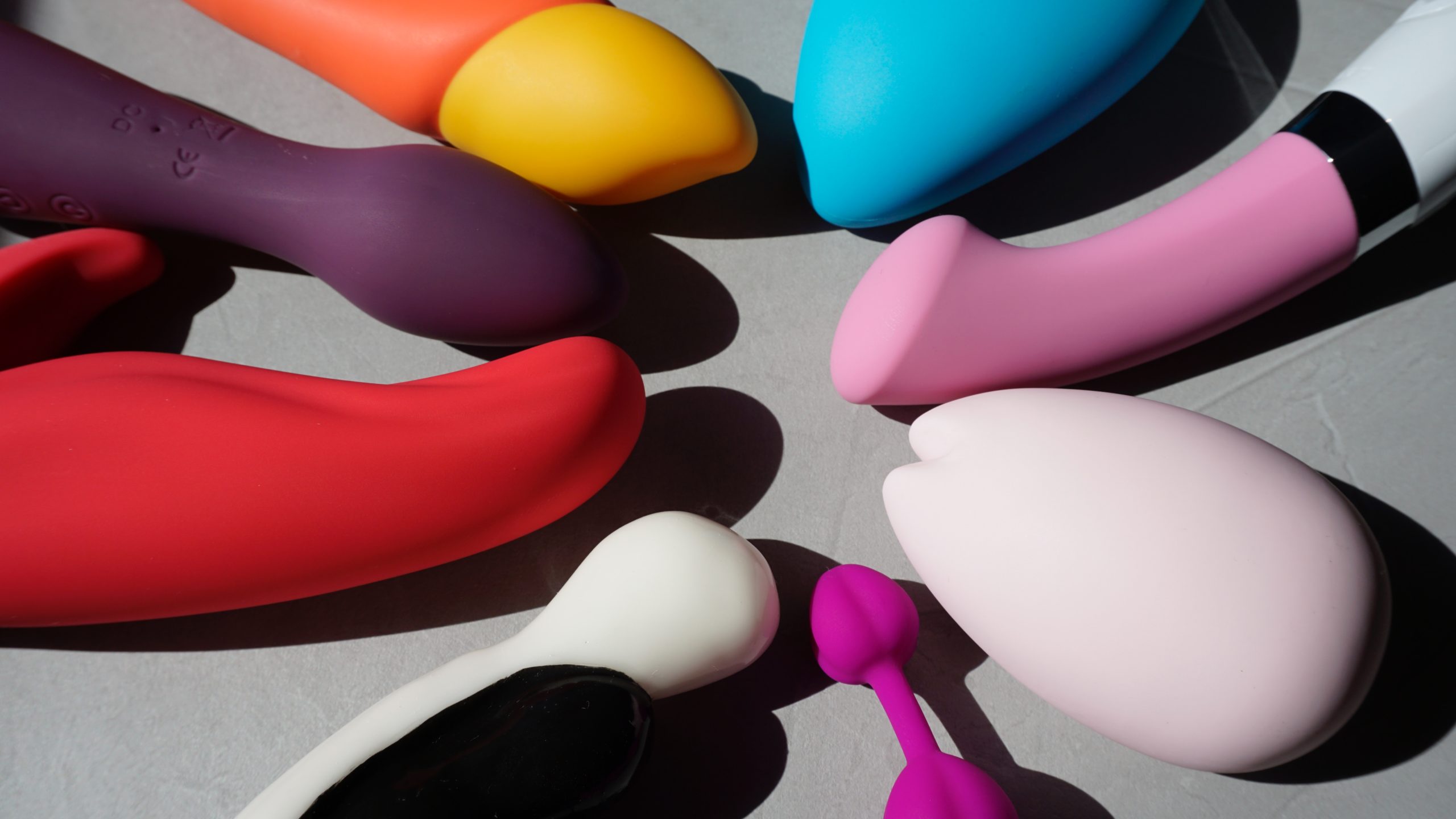
The next gift idea is a list of adult toys you can play with for yourself or with your partner. These are great for all genders and sexualities. While there are many to choose from, I focused on a line of toys that ticked a number of boxes for me. Things that I looked for: I wanted them to be safe, made from high-quality silicone, and safe for your body. They are free from phthalates, BPA and latex. I wanted them to be able to be used in the shower or tub, 100% Waterproof. I wanted a good battery life for multiple hours of fun.
Also, I wanted the toys to be easy to clean. And the last item on my list was affordability. There are number of companies that offer a safe and good product just about everywhere. The following is a suggested list for your consideration.
Dual Vibrating Massager: (For anyone with a vulva)
Vibrating Ring: (I think this is interesting that although designed for use in the vulva, you or your partner can place it against the prostate massager giving it a kick at the base.)
Vibrating Feather Tickler (For anyone with nipples)
Vibrating Plug (For anyone with an anus)
Prostate Massager (For anyone with a prostate)
These products can be found by Googling ‘sex toys’. Do not forget to use some of your favorite water-based lubricants in case the users do not have enough organic lubricants. One can say, the more lubricants, the ‘funner’ the play.
The last gift idea is a tried and true one, a Coupon Book. What is great about this one is you can choose what you want to give, such as coupon for a hug, kiss, snuggle time, bubble bath, massage, oral sex, romantic dinner, or sex, to name a few.
Now remember, you are giving this book as a gift to someone. That someone gets to have a hug, kiss, or oral sex from you. So, if you are not into oral sex, do not make a coupon for that. Just like if your partner does not like a bubble bath, do not give a coupon for something that you know is off the table. If you are creative, go to town, but if you are not, there are ideas on the web, just Google ‘fun coupon books’.
You will get articles on how to make coupon books including step by step tutorials. All you need is to know what your partner likes and what you are willing to do.
Here is the thing, what is great about these three gifts ideas is they can be done by yourself or together affordably. I love art. I also love sets of art. That being said, you can do the love art by yourself. There is something sensual about touching yourself and something even better about seeing a picture you made while giving yourself pleasure.
Now, what did I mean about sets of art? If you do one and you have your partner do one and then a third one can be you both playing with each other. As far as the toys go, they are great stand-alone or for fun with others. That brings us to the coupon book. You can always make a coupon book for yourself. I do.
Sometimes I need to spoil myself and that is perfectly acceptable. Life asks a lot of us all the time. We often do not notice, but soon it catches up with us. We feel run down, drained, and not appreciated. But that is on us. We are not taking care of ourselves like we should. We need to give ourself love and pamper us from time to time to keep us charged. So, whether you try this at the holiday or afterwards, the take away is to have fun and always keep things consensual.
Lorelei Riyu is a model, mother and concerned woman–one who, like many other women, was deeply impacted by the United States Supreme Court’s recent decision to overturn Roe Vs. Wade.
With decades old protections of women’s reproductive health now endangered or gone altogether, Lorelei is joining the worldwide army of women who are fighting back; pledging to regularly donate a significant portion of her Chaturbate tip funds to groups that help women find safe and viable reproductive health services.
And, as with many acts of feminist rebellion, this one started with a spark of creative rage.
“I didn’t feel sad or scared or worried. I felt angry,” she said regarding her reaction to the Roe decision. “We seriously backtracked the progress of society. I have a son and a daughter who are just a few years from puberty and the “birds and the bees talk”. I can’t believe I’m going to have to tell them to be extra careful because unprotected and uneducated sex is so much more dangerous now. I’m going to be educating them on adoption and children in the system who want families. I hope I can teach them the importance of waiting with how expensive children and life, even without them is expensive and pressing.”
Riyu decided to take action.
“I’m so mad thinking about how many more back alley abortions there will be. How many suicides, how many rapes from those who just don’t care. Because that’s what this is too. People, not all, but people have a problem accepting the word “no”. For everyone telling women to just “wrap it or stop having sex”, it doesn’t work that way all the time, even if you convince yourself of that. That doesn’t stop the possibility of the worst happening, on both ends,” she said. “I don’t plan on stopping, ever. Being a camgirl is my full-time job, so I live off the tips I make, but I will never stop showing my support for this. I’m going to be taking tips two weeks out of every month and sending them off to camping sites to show support. Granted, I’m a small town lady, so my donations aren’t going to be immediately life changing, but I hope that no matter how much I make to be donated, that it helps to benefit a women’s life in the way that her government refuses to.”
Riyu is committed to her fight, on behalf of both her own children and women everywhere.
“As I stated, I have two children growing up into future adults and citizens of this country. I have to fight for their futures and their freedom, even if it’s from my home. I wish I could go to the protests out there and show support in person,” she said. “Several of my friends have had miscarriages. Several of my friends are so small that if they had children, it could potentially kill them. They shouldn’t have to endanger their own lives in order to fulfill whatever plan the government has brewing. I’m donating my tips to camping services in or around my area; not chosen any specific way, so if there’s a Facility that you would like to see get some donations, my messages are open. I don’t answer hate mail, so you can try, it won’t work.”
Riyu wants women in need to know that they are not alone.
“Don’t feel alone babes. The last thing you are is alone, look around you. I know things look so bad right now, but what we can do is get angry and fight for our freedom,” said Riyu. “Don’t let them take our voices but be safe about it. Don’t stop protesting. Let them hear you. Make them hear you. They’re supposed to work for us, not manipulate and control us. They’ve forgotten that and they need to be reminded.”
By visiting Chaturbate.com and visiting the channel watch “Thereal_Loreleiriyu” live on Chaturbate, you can take in a good show for a good cause.
“You can visit me on Chaturbate and help show support every weekday. I do two shows a day, can’t miss me if you tried. I have a good time no matter what. My room is built on good conversations, great music, and better vibes. I have viewers frequently tell me how much fun my room is,” said Riyu. “They love the throwback songs; they love the vibes I give off (and that’s because I’m goofy all around). I don’t judge one way or the other, but I don’t tolerate drama. My room has rules, they’re pinned to the top of my Twitter. Breaking those are about the way to get kicked, I don’t hesitate with disrespect to my room and my viewers, we’re all there for a good time, so let us have it.”
Erotic hypnosis is the practice of hypnotizing someone for the purposes of sexual arousal, erotic stimulation, and even to achieve orgasm (or mindgasms or hands free orgasms), by creating extremely intense erotic experiences of pleasure inside the mind without the stimulation of the physical body. While erotic hypnosis is not generally designed to be therapeutic, it certainly can be. Erotic hypnosis can also be used as a guided masturbation journey aka: “jerk off instructions”.
Wikipedia says that, “Some erotic hypnosis is practiced in the context of BDSM relationships and communities, and is an example of a sexual fetish or paraphilia.” —Wikipedia
What are the Advantage of Erotic Hypnosis?
Believe it or not, erotic hypnosis has many benefits and can be therapeutic, as mentioned above. Erotic hypnosis can:
Help you unwind and relax the body and the mind
Relieve stress and clear your mind of unwanted clutter
The more relaxed you are the easier it is to open to pleasure and experience more pleasure
Get into altered states of consciousness
Reprogram your subconscious to remove limiting beliefs
Becoming hypnotized and suggestible is a wonderful way for a listener to hyperdrive his libido. Those who enjoy drifting into hypnotic trance discover just how effective it is in clearing the mind of those cluttering runaway thoughts and letting your mind just follow the directions of the hypnotist.
Hypnosis and hypnotherapy are excellent ways to rid the subconscious mind of blocks and obstacles placed within it during childhood or difficult life experiences enabling the listener to change undesirable attitudes and habits into desirable ones. But, what about the use of hypnosis as a tool to encourage and stimulate arousal, to experience the mind’s capabilities under hypnosis for sexual experiences and discovery?
Yes, it can be as good as it sounds and there is an ever-growing community who enjoy drifting into the sleepy surrender of hypnosis to find what turns them on and to discover their “hypnokinks”.
So, You Might be Thinking What’s the Point?
I’ll watch a little porn, toss one off and go to bed. But what if you opened your mind a little bit, gave up some of your usual control and listened without expectation to a voice and dialogue designed to arouse you? Falling into a hypnotic trance can activate specific reactions deep inside of you and you wake to discover just how horny you have become during the process.
The Journey into Erotic Trance is Very Good for You
Life is challenging and stressful. The ever-expanding abilities of technology increase our daily workloads and more is expected to be completed in the average workday. In addition, we are bombarded with news and opinions from our ever-growing link with social media. To remain healthy and balanced, it is important to find a quiet space, let it all go, to learn to quiet the mind and enjoy a little relief from the daily heightened stimulation and negativity. Hypnosis is similar to meditation in that the goal is to quiet the mind enabling it to release thoughts and simply slow down and become clear, to focus on the speaker and journey inward for a while. A wonderful byproduct of clearing the mind is the body becomes relaxed.
The eventual goal of the hypnotist is to bypass the conscious mind and speak directly to the subconscious mind and discover your individual “sexy” and build upon it.
The Difference Between Erotic Hypnosis and Clinical Hypnosis
Erotic hypnosis differs from clinical hypnosis in that the restrictions of sentence structure in clinical hypnosis do not exist. We erotic hypnotists can just say what we want, straight speak, without worry of using negative words such as can’t, don’t, won’t. The hard rules of hypnotherapy’s use of language are disregarded in the creation of erotic hypnosis.
Erotic hypnosis is not generally designed to be therapeutic (although it can be). It’s enjoyed to reach a state of euphoria and feel really good afterward or to be aroused. Depending on the suggestibility of the listener, the level of arousal can be extremely intense and can create experiences of pleasure inside the mind without the stimulation of the physical body.
Erotic Hypnosis for Hands-Free Orgasms!
There is a phenomenon known as a “hands-free” orgasm in which the listener experiences a pleasurable mind-produced orgasm (a mindgasm) and some are able to experience this mental orgasm complete with ejaculation. All of this is accomplished through the use of suggestion. The subconscious mind is extremely powerful and a good hypnotist can make you come with words alone, but you must let it happen and be open and receptive to the idea.
No one can make you do anything you don’t want to do or think you can’t do, even if you’ve seen it happen on television.
Ejaculation is Necessary for Good Sexual Health
Have you ever thought about a sexy hypnotist telling you exactly how to do it? Another genre used in erotic hypnosis is the acronym JOI which stands for “jerk off instructions” otherwise known as guided masturbation. An erotic hypnotist can elevate your arousal level using the increased suggestibility found in a hypnotic trance state. The suggestions to heighten your physical response during masturbation are extremely effective under hypnosis and you simply respond more intensely. Many individuals have trained their minds to stay inside the hypnotic trance even after ejaculation.
Your Increased Suggestibility Leads to More Intense Orgasms
Another popular use of erotic hypnosis is to increase the listener’s arousal level so when one exits hypnosis, your arousal switch has been flipped on. “You are getting very horny” simplifies this type of suggestion, but, erotic hypnosis sessions can definitely create a heightened arousal level for you to discover when you wake again.
Want to Get Turned on Before Partner Sex?
This is an excellent way to make it happen. Or even better yet, learn how to hypnotize your partner and engage in this very intimate exchange together. Hypnosis makes for great sex.
Many Subjects Become Aroused by Simply Being Hypnotized
A “hypnofetishist” is an individual whose kink is being hypnotized deeply. There is great freedom in surrendering yourself to a hypnotist for a period of time and the experience itself can be highly arousing to certain individuals. Deep trance feels good and enjoying a space in time where nobody has demands on you can be very relaxing, de-stressing and arousing. Listening to a sexy voice doesn’t hurt the libido either. Just let go and see what pops up!
Find A Certified Erotic Hypnotist
There are many educated, knowledgeable erotic hypnotists out there catering to many different erotic tastes and styles. If erotic hypnosis sounds like fun to you, go out there and see what’s available. Have fun and find that one hypnotist that attracts or resonates with you. But, find someone you can trust with your mind. It’s not something you want to give away freely. Do your homework. Read the reviews. Check out their credentials.
Go get horny by hypnosis, but be safe in doing so!
Mistress Carol Credentials: Mistress Carol is a certified hypnotist and clinical hypnotherapist. She has been creating erotic hypnosis sessions for nine years. She is known for her erotic creativity and professionalism, sexy voice and her natural seductive style. In addition to creating erotic hypnosis recordings, Mistress Carol is also a practicing hypnotherapist in her community. Listen to her sexy erotic hypnosis sessions at EroticHypnosisForMen.com.
The external size and appearance of the clitoris is different for every woman. For the most part, it usually looks like a fleshy pebble that gets hard during sexual arousal. Sometimes, you can’t see or feel the clitoris until a woman is sexually aroused. So before you hone in on the clit, get her going – seduce her, caress or massage her body and breasts, or softly play or caress her labia. Any one or more of these techniques will bring the clitoris out to play!
A Light Touch is the Best Touch
A light touch is the best touch, at least at first. Flick the tip of your tongue on or around her clitoris. Lightly move your fingertip on or around her clitoris. Lube helps if you’re using your fingers. The slick sensation of lube feels awesome and will usually help get her wet. Start with a gentle setting on a vibrator or a vibrator that doesn’t feel like a grinder. Check out our review of the Magic Wand Original Vs Magic Wand Rechargeable!
A note about vibrators: I know a lot of guys are threatened by vibrators. Don’t be! Vibrators are not intended to be a replacement for a man or his penis, and she really prefers having you in bed with her! Vibrators provide a much different sensation that will send those thousands of nerve endings into a wild frenzy. Just give it a try. You’ll love the way she’ll spin into a frenzy!
Think of fingering, licking or using a vibrator on her clit the same way you enjoy a hand job or a blow job. Change things up every once in a while. Circle your tongue around the clit. Tease the clit by lapping on the folds of her inner labia. Be spontaneous. If there’s something that she really likes, stick with it. If you pay attention to how she sways, shimmies, moans or tells you how she likes it, you’ll know that you’re the Master of the Clitoris!
When to go Full Throttle
Photo by Anastasiya Lobanovskaya from Pexels
If you have a woman who knows what she likes and is comfortable with letting her inner wild woman (Goddess 😉 out, believe me, she’ll tell you. She might tell you to rub harder, pull your head closer during oral, start taking God’s name in vain, or moaning and trashing around like a demented banshee. Any or all of these not-so-subtle cues are to let you know it is time to go full throttle baby!
The Clit and Penetration
There are some positions that are great for clitoral stimulation during penetration. Rear entry or doggy style is a great way to allow you or her to rub her clit.
Vibrating cock rings are a great hands-free way to stimulate her clit while your penis is penetrating her as far as it will go in. And, don’t forget about the Trigasm (clitoral, g spot and anal pleasure all in one)!
The Approach
Photo by juan mendez from Pexels
Don’t view playing with her clit as an obligatory chore as a means to an end, i.e. thrusting your dick inside of her. The more you pleasure her this way, the more likely she’s going to be when she’s ready for a good pounding. I promise you that she will be and penetration will be off the charts, even if she comes wildly while you’re playing with her clit. If she needs a breather after she comes through clit play, she can usually get it back up again through other ways often in minutes. An orgasm can actually energize a woman instead of making her feel like she’s done for.
By all means, don’t ask her if she’s ready for penetration. This is an automatic mood killer. If you don’t know, she’ll feel like you’re not paying attention to her or think that you’re just in this for yourself.
Most importantly, be patient. Some women get aroused immediately. Some women need as much as 20 minutes. Even the same woman may need varying amounts of time to be clit- and penetration-ready.
If one was to look up the phrase kickass woman in the dictionary, one would probably find a beautiful photo of Goddess Lilith–an esteemed and revolutionary singer on the metal scene who also shines on the adult scene as a woman to be reckoned with–and the Feminist Sexpert reckons that we ladies need to support Lilith as She embarks on yet another leg of Her auspicious musical career.
This award-winning, internationally renowned, and bicoastal Dominatrix, Luxury Mistress and Fetish Model, Certified Life Coach, Reiki Master, and Author Goddess has made a name for Herself as lead singer of the goth metal band Sorrowseed, which rocks audiences around the world–as powered by one of the mightiest and unmistakable female vocalists on today’s music scene.
Now Lilith begins an exciting new phase of Her career as the lead singer of MURTAIR, a heavy metal band ready to release a five-song EP that inspires listeners to thrash with its hard groove and electronic elements. Her fans, slaves, and supporters are encouraged to support the band’s Kickstarter campaign, where funds raised will cover the vocal recording, mixing, and mastering the EP, artwork, printing 250 limited edition EP, digital distribution, and camera rental and location costs to make the music video.
“Murtair is more brutal than Sorrowseed,” She said. “This EP is about taking back what has been taken.”
In essence, though, Goddess Lilith’s music always has told the stories of survival. Demeter’s Reckoning, a cut from the Sorrowseed recording The Extinction Prophecies, tells a tale of ethereal revenge, in which a goddess of the earth and seasons takes vengeance for the abuse of our environment.
“When I think about it, it’s all interconnected,” She said. “The way we treat the environment, the way we treat women. We should take better care of them.”
Lilith is a woman with a lot to say–and She generally sings it. Goddess Lilith is, in fact, a classically trained vocalist who holds a Liberal Arts degree with a focus in dramatic arts from Harvard.
“I’ve been singing since I was a toddler,” reveals Lilith, who plays piano, guitar and other instruments. “I always wanted to imitate my heroes.” These heroes range from Nirvana to Joan Jett.
Goddess Lilith now has many fans of Her own, both in the musical sphere and owing to Her role as a premiere dominatrix.
“I’ve always liked to lead men around on leashes, so why not do it professionally?” She said with a smile. “I’ve always been dominant in my personal life.”
She has graced the pages of Hustler’s Taboo and Malevolent, AltStar, Beckett Online Gamer, ASN Lifestyle, and 420 zine Skunk magazines.
Goddess Lilith has received many accolades, including Footnight International’s Most Captivating and Fascinating and Top Trampler Awards, as well as Best Female Cam Performer at the 2018 and 2019 Fetish Awards, and Fan Favorite Alt Visual Arts Book of the Year from the 2021 AltPorn Awards. She’s also scored numerous nominations from Fetish Awards, Footnight International, AVN Fan Awards, XBIZ Cam Awards, Fleshbot Awards, AltPorn Awards, YNOT Cam Awards, and Fetish Awards.
On-screen work, teaching, and event organizing reign as Her true passions. In 2018, She introduced New England’s first recurring FemDom Event ExaltedFemdom.com and hosts foot worship parties newenglandfootfetishparty.com.
She also enjoys gaming on twitch.tv/LilithAstaroth. Learn more about Her at goddesslilith.com. Buy Goddess Lilith’s eBook How I Make Bank as a Foot Model (And You Can, Too!) on Amazon amazon.com/dp/B08RHR3TJK/r and Gum Road gumroad.com/l/jxzKb.
Goddess Lilith says that She has faced blowback in the music industry, both because of Her strong persona and Her career in the adult industry. Yet nothing stands in the Goddess’ way; and in the future, this force of nature stands to take the world by storm.
“I want to teach much more in the future,” She said. “And I want to be of service to women.”
Let us now serve the Goddess by supporting The MURTAIR Kickstarter campaign. Goddess Lilith welcomes pledges in any amount. Backers can choose to get no perks and give generously to the project or pledge $5 or more to get an EP. Funds raised beyond the initial goal will go towards merchandise and a second music video. Make this project happen and pledge at https://bit.ly/3CPd8iE.
Subscribe to Her premium social media on LoyalFans loyalfans.com/GoddessLilith, OnlyFans onlyfans.com/GoddessLilith and AVN Stars stars.avn.com/goddesslilith. Buy Her clips on and Clips4Sale clips4sale.com/4064, iWantClips iwantGoddessLilith.com and ManyVids manyvids.com/Profile/1001198534/Goddess-Lilith/Store/Videos. Search and subscribe to Her Pornhub content pornhub.com/pornstar/Goddess-Lilith. Follow Her on Twitter @GoddessLilith66, Instagram @GoddessLilithDomme, Snapchat @Goddess.Lilith, and Facebook facebook.com/GoddessLilithDomme. Learn your place by texting Her on SextPanther sextpanther.com/Goddess-Lilith. And check Her social media to see days/times She’s cracking the whip live on CAM4 cam4.com/GoddessLilit, MFC profiles.myfreecams.com/GoddessLilith, Chaturbate chaturbate.com/GoddessLilith or Cams.com cams.com/GoddessLilith.
As the world becomes more tolerant and accommodating, it is essential to have healthy conversations about formerly prohibited topics. Sexual deviations are one such topic that requires sensitivity and comprehension. We will delve into some common sexual deviations and discuss how websites like OnlyFans are helping to create a safe, non-judgmental space for exploring diverse sexual interests.
Understanding Sexual Deviations
Sexual deviation, also referred to as paraphilia, refers to unorthodox sexual behaviors or interests. These interests, which deviate from what is typically considered “normal,” can range from innocuous fixation with certain objects to potentially dangerous behaviors. It is essential to observe, however, that the term “deviation” should not necessarily convey a negative connotation. Consent, safety, and legality serve as the defining characteristics. Sexual deviations can be a part of a person’s healthy sexual expression so long as they are respected.
The Role of Platforms like OnlyFans
In recent years, platforms such as OnlyFans have emerged as indispensable spaces for content creators and consumers to investigate diverse sexual interests in a secure and nonjudgmental environment. OnlyFans has served to normalize conversations about sexual preferences and deviations by providing an environment that respects boundaries, values consent, and promotes openness.
A Broad Look at Some Common Sexual Deviations
Here is a look at some common sexual deviations. These are mentioned with respect and understanding, without intending to judge or stigmatize:
Exhibitionism: A sexual preference for exposing oneself in public.
Voyeurism: Deriving sexual pleasure from watching others engage in private activities, often without their knowledge or consent. This is illegal and unethical without consent.
Fetishism: Sexual fascination with nonliving objects or non-genital body parts.
BDSM: An umbrella term covering a range of interests including bondage, discipline, dominance, submission, sadism, and masochism.
Photo by images.toolbox.com
The Intersection of Technology and Sexual Deviations
In the digital age, technology has become intertwined with our erotic exploration and comprehension. OnlyFans and other platforms offer a secure, regulated, and considerate atmosphere for the exploration of sexual deviations. In addition to content consumption, these platforms provide education, resources, and a community for those with these interests.
The Importance of Comprehending and Acknowledging
Regarding sexual deviations, acceptance is crucial. Everyone has distinct sexual interests and preferences, and it is essential to approach them with sensitivity, so long as they adhere to safety, the law, and informed consent. OnlyFans and similar platforms play a significant role in promoting sexual diversity acceptance and healthy dialogue.
Debunking Misconceptions about Sexual Deviations
In order to approach sexual deviations with an open mind, it is necessary to dispel some prevalent myths:
All Sexual Deviations are Harmful or Negative: As stated previously, sexual deviations comprise a wide variety of interests and behaviors, not all of which are harmful or negative. As long as they entail consensual, legal, and safe practices, many can be part of a healthy sexual existence.
Only a Small Percentage of People Have Sexual Deviations: In reality, the majority of individuals have at least one or two sexual preferences that could be categorized as deviations.The primary distinction rests in the extent to which these impulses are pursued and whether or not they cause oneself or others distress or harm.
People with Sexual Deviations are ‘Abnormal’: It is essential to remember that a sexual deviation does not make a person “abnormal” or “deviant.” It merely denotes that they have sexual interests that deviate from what is conventionally considered “normal.”
The Positive Impact of Platforms Like OnlyFans
OnlyFans has had a significant positive impact on the promotion of healthy sexual deviation exploration. OnlyFans has helped to normalize sexual interests that are often stigmatized or misunderstood by providing a platform for content creators to share their work. Additionally, the website promotes education and comprehension of these interests, thereby contributing to a more tolerant and open society.
The realm of sexual deviations is vast and intricate, comprising a diverse range of interests and behaviors. The principles of consent, safety, and legality are essential to comprehending these deviations. As society becomes more accepting of diverse sexual interests, platforms such as OnlyFans provide a much-needed secure space to explore, comprehend, and express these interests without fear of ridicule. Through ongoing education and open dialogue, we can cultivate a society that respects and recognizes the sexual preferences of all individuals.
You’ve spent all winter (and spring) saying you were going to get back in the gym to ensure you could show off your body all summer… yet here we are… a few days into Summer, and the only workout you’ve done was 15 reps of lifting that spoonful of ice cream to your mouth.
It’s ok! Don’t be so hard on yourself. Life has changed drastically for all of us over the past couple of years.
We were thrown into a world of social isolation, remote working, and future uncertainty resulting from the unexpected pandemic caused by COVID. For the past two years, you’ve binged on snacks and unhealthy eating habits that pulled you further and further away from #bodygoals. You were adamant that you would get it together “soon” because you have so many cute outfits and swimsuits you haven’t been able to wear, and you HAVE to show them off this year. And with more people getting vaccinated daily, we knew the world would open up again by summertime. Now that time has come, you’ve got your vacation getaways all lined up, and you and your friends are ready to catch flights and not feelings all hot girl summer… BUT… now you’re feeling a little conscious about your body, and you’re trying to figure out how to lose weight and whip your body into shape like yesterday, right?
You aren’t alone.
Body confidence may be difficult to achieve, regardless of size. It’s so simple to compare ourselves to others while becoming progressively dissatisfied with the portions of our bodies we despise the most. Of course, this lowers our self-esteem even further and might influence our closest relationships while also ruining vacation mood.
Stop sweating yourself! You do NOT have to be a “Negative Nancy” or “Bitter Betty,” I’ve got you covered.
Here are 6 tips boost your confidence this summer:
1) Get to know, love, and appreciate your body. Avoiding the mirror and trying not to glance down in the shower will just make the situation worse down the line. Instead, spend some time looking in the mirror at your naked self. Really take a good, long look at your body. Take your time exploring and admiring every curve and crevice in the mirror.
Every day, mention something good about a part of your body. Begin by verbally emphasizing what you love and appreciate. When you get to the sections you don’t like, try to think of anything positive about them. If you can’t think of anything, you’ll need to figure out why you dislike that area so much and make a note of it so you can start acting to change your thoughts on those parts.
This will begin to alter the way your mind perceives your body. Remember that you are your own worst critic, and things aren’t always as bad as they appear to you.
2) Dress the part. You will gain confidence by putting effort into your appearance. When you’re happy, it shows in the way you carry yourself. Wear lingerie or clothing that makes you feel sexy. Not sure how to find something sexy you’re confident wearing? Trying to focus on pieces that flatter your figure or highlight the parts that you do love.
3) Get up and get moving. Health is wealth. What are you doing for your health? Exercising for as little as 30 minutes a day builds endurance, improves stamina, and — you guessed it, can improve your mood, energy, make you feel lighter. If you have gym anxiety, you can dance around the house, walk through your neighborhood, play outdoors with the kids, or indoors with your partner (wink). Overall, you will not only feel better, but you will also begin to feel more confident.
4) Celebrate more than your physical self. It’s difficult to remove yourself from judgment in a society when looking like an IG model and being shaped like a coke bottle appears to be the new standard, and photo likes on social media are how popularity is calculated.
This is why we should also focus on the non-physical aspects of ourselves. Are you artistic or crafty? Do you know how to yodel? Are you excellent with money? What about style? Maybe you’re incredibly hilarious. Whatever you are or can achieve, remember that you are more than a physical body, and your value extends far beyond a scale (or that skimpy 2-piece bikini you’ve been holding on to as motivation). Whether we realize it or not, these factors have a significant impact on our level of confidence.
5) Talk to your friends. It’s easy to believe that we’re the only ones who are unhappy with our bodies. However, you’d be amazed how many of your friends struggle with body image issues as well. You would also be surprised at where their insecurities lie, especially if it’s something you believed they were fully confident about.
Connecting with your friends on such intimate topics can strengthen your relationship with them, and just talking about these matters can help boost your confidence.
6) Stop comparing yourself to others. When we look at others, we often compare their best traits to our worst. We focus on their accomplishments while overlooking our own, leaving us feeling inferior. This is an unrealistic comparison that might exacerbate your anxieties and lack of self-confidence.
When you start comparing yourself to others, you take away your joy and confidence. Because of human nature, I realize this is easier said than done. Don’t be concerned with how others appear or what they own. Instead, concentrate on your self-worth and strive to improve yourself every day. Don’t hold yourself to the standards of others; rather, set your own. Be true to yourself. Accept yourself for who you are.
There is no such thing as a “perfect” summer body. In reality, the notion of a summer body was created as a way for advertising companies to sell weight-loss products, cosmetic surgeries, fashion and beauty items. Rise beyond the desire for self-criticism and accept yourself as the amazing person that you are.
Giving great fellatio can require skill, knowledge, and the desire to provide the most pleasurable experience for your partner. Prepping to provide that great head, is relatively easy.
Photo by Deon Black
Be Safe First
STIs (Sexually Transmitted Infections) can be contracted during oral sex so it is important to use condoms. Some people use them, some don’t. Flavored condoms can be fun and flavorful. Don’t use lambskin condoms for fellatio. Don’t brush your teeth before performing fellatio. Brushing makes hundreds of tiny little cuts in your mouth that will make you susceptible to STIs. Wait until afterward.
Improve Your Gag Reflex
Having an issue with gag reflex? Try practicing the water drip exercise to improve your gag reflex. Take a small (very small, a drop) sip of water into your mouth, put your head back and let the drop roll down your throat as long as you can without using your throat muscles to swallow. Once you’ve let it go down your throat as long as you can, swallow it. Deep throating can be an issue for some. Start off slow and work your way into it at every session. Using a throat numbing spray can help as well, it numbs the throat making it easier to take in the penis. There are also numbing mints that can make fellatio easier.
Positioning
Plan on positions. Lying on the bed with your head leaning off the foot of the bed and your partner leaning over you, will allow you to get the deepest entry with the most comfort. He can also lean over and provide a little cunnilingus while he’s there. Another good position is him standing in front of you and you sitting. This is a good position as well, but he will eventually want to sit or lie down if your session is extended. Most positions where the penis is going into the mouth in its natural curve is most comfortable.
Photo by Marek Studzinski
Watch Your Mouth
Always cover your teeth with your tongue to ensure the most comfort during fellatio. You don’t want to bruise your partner or accidentally break the skin of his member. If you are an expert, you can use the comb method, gently going up and down the penis with your teeth gently combing the penis. There are little gummy mouth guards that also work well for covering the teeth.
Photo by Tracy S Dog
Toys for the Boys
Use toys during fellatio sessions to give your mouth a break. Bullets are great for stimulation during fellatio. Use them on the scrotum, perineum, and shaft. Tongue vibrators are awesome to use during fellatio. The constant vibration from your every move with your tongue adds an additional level of excitement. Strokers are also useful during fellatio when you’re giving your mouth a break. Using a basic stroker is best. Just put it over the penis and use it to go up and down and side to side, massaging the penis. Make sure a good water-based lube (flavored if you like) is used to keep things slippery. Stay away from warming lubricants that may contain capsaicin which could burn uncomfortably on the penis and in your mouth and throat.
Photo by Claudia Love
Have Fun!
Being skillful at giving fellatio is an attribute your partner will appreciate. Whatever you do, have fun with it. Make fellatio exciting and enticing. Discover what movements and positions your partner enjoys. Sensual intimacy is always increased when we enhance our sexual skills so have fun and start prepping!
Robert Palmer - Addicted To Love (Official Music Video)
Might as Well Face You’re Addicted To Love
“My fear of abandonment is exceeded only by my terror of intimacy.”– Ethlie Ann Vare
“Addicted to Love” was a hit song for Robert Palmer in 1985 and remains a perennial pop favorite today, but the reality of love addiction isn’t so much fun.
Being in love feels fantastic but not when it crosses into obsessive thinking, manipulation, crippling fear, and panic attacks. If self-worth and happiness all hinge on a romantic relationship, it places a stranglehold on a healthy life. This overwhelming need, this
starvation for love, thrives on a dangerous blend of high expectations and low self-esteem. The ‘love addict’ begs for a love that he or she feels unworthy of, creating a no-win situation.
In her book, Love Addict: Sex, Romance, and Other Dangerous Drugs, Ethlie Ann Vare offers incredible insight into the rarely discussed affliction of love addiction. By using alcoholism as a comparison, she found that many of the psychological and behavioral issues were the same, which indicates that, like the difference between a heavy drinker and an alcoholic, there is a difference between someone who loves love and a love addict.
There really isn’t a strict test to decipher if you’re a love addict, but Ethlie offers a series of statements to consider that may indicate a problem.
Here are 10 of them:
1. I often feel an instant connection to someone I’ve just met.
2. I consistently choose partners who are emotionally, geographically, or logistically unavailable.
3. I have passed over family, social or career opportunities in favor of romantic and sexual ones.
4. I use sex to hook a prospective romantic partner.
5. I have considered, threatened or attempted suicide over a relationship.
6. I feel worthless when I am not in a relationship and jump into the next one as quickly as possible.
7. When I’m attracted to someone, I often ignore warning signs that this person isn’t good for me.
8. I am possessive and jealous when I’m in love.
9. I like to be the pursuer in the game of love, even chasing after people who have rejected me.
10.I have been dependent on drugs, alcohol, gambling, spending or food in the past, but most people think I have my life together.
Again, this is not a scientific test and it’s actually possible to answer “yes” to all of them
and not be addicted to love. However, your gut reaction to the questions and the intensity
with which you can answer “yes” is a good indication of whether or not you should take a closer look. The concept of love addiction is incredibly complicated, largely because it is so hard to understand. As Ethlie puts it, “Sex and love aren’t the problem. They are someone’s solution to a problem we don’t understand.”
Photo by Engin Akyurt from Pexels
As described by doctors Harvey Milkman and Stanley Sunderwirth in their book, Craving for Ecstasy: The Consciousness and Chemistry of Escape, the brain’s reward system has three divisions:
1. Arousal: gambling, cocaine, extreme sports, sex
Romantic relationship elements are the only ones that cross all three divisions, making love addiction quite intense. What helps define behavior as an addiction is the obsessive element. A desire for love is replaced with an obsessive need for love that can lead to stalking tendencies, excessive relationship “hoping,” and mistaking every “hello” as an invitation for romance.
The brain chemicals most associated with love addiction are dopamine, serotonin, vasopressin, oxytocin, and phenyl- ethylamine (PEA), with others like testosterone and adrenaline coming into the mix as well. While all of these elements play a big part in a healthy romantic relationship, it is the miscommunication between these elements within the addict’s brain that causes problems. In Healing the Addicted Brain, Dr. Harold Urschel uses the analogy of a phone call to describe how this miscommunication happens:
If one cell is trying to speak to another cell but doesn’t have enough of the necessary neurotransmitters, it can only whisper its message or even become mute. If it has too much of certain neurotransmitters, it may send an incorrect message. Conversely, if a cell is trying to listen to another cell but doesn’t have the proper assistance, it will only hear the message faintly, if at all. Or, if the cell has too many of a certain receptor, it will ignore the messages of others. It’s not an imbalance that happens as much as the addict brain isn’t using what it has properly. The trigger, whether it is cocaine or a new relationship, gives a short-term boost to these transmitters, causing a chain reaction through the brain’s reward center, which in turn creates a hunger for these euphoric feelings.
Love addicts can feel a gaping hole in the center of their lives when they are not in a relationship. It is in his or her nature to quickly, desperately find the next partner, simply to have someone, anyone, to give their life meaning. It is easy to focus on the potential of
something instead of the reality of it. You must look at your situation as an outsider and examine the facts as they are today.
Is this relationship healthy?
Are my needs being met?
Have I accidentally placed my partner on a pedestal?
Are we equals or am I the only one willing to compromise?
Sadly, making the choice to stop loving in an unhealthy way may result in the need to end a damaging relationship. A partner, who has been treated like royalty, with no need for compromise or equality, may not know how to give you the healthy relationship you need.
Even the end of a bad relationship needs a grieving process. It helps cleanse the psyche so the same negative patterns don’t get repeated. Give yourself time to fully feel the loss and try to find the positive things that you can take away from the experience.
Addicted To Sex
Photo by Nathan Cowley from Pexels
Enjoying sex certainly isn’t a cause for concern, nor is a desire to have sex often. However, there is a line that can be crossed when desire becomes an obsession and that’s when things become troublesome and dangerous.
Sex addiction afflicts someone that has a compulsive sexual disorder with no (or little) self-control. It is believed that as many as 30 million people in the United States suffer from some level of sexual addiction.
Consider the following questions that are used to define someone’s level of addiction:
1. Do you think about sex so often that it interferes with your concentration?
2. Are you obsessed with a specific person or sexual act even though it brings you cravings and discomfort?
3. Are you finding your sexual pursuits affect your ability to manage your life?
4. Do you HAVE to flirt?
5. Do you feel you are entitled to sex?
6. Would life have no meaning without sex?
7. Do you think that sex is the only thing that really gives you value?
8. Do you use sex as an escape from other problems or stress?
9. Do you keep a list of the partners you have been with?
10.Do you need the “high” that the dangerous sex and the risk of being caught can promise?
If your answer to all these questions is “yes”, then you possibly suffer from sexual compulsion. Sexual addiction is a relatively new addition to psychosexual disorders. People were simply defined as being hyper-sexual, players, promiscuous, and not wired for
monogamy.
“Sexual addicts are willing to sacrifice what they cherish most in order to preserve and continue their unhealthy behavior.”– Dr. Patrick Carnes
It was as recent as 1983 that sexual addiction first came to the front and center of the news as a legitimate medical concern upon the publication of Out of the Shadows: Understanding Sexual Addiction by Dr. Patrick Carnes. These hyper-sexual behaviors are
oftentimes connected to other addictive or obsessive personality traits, psychological disorders, self-esteem issues, self-destructive behavior, hereditary addiction issues, and lowered sexual inhibitions.
A sexual addict’s mind is sparked the same way as most addictions occur. The brain tells
the sex addict that having illicit sex is good the same way it tells over-eaters that over eating is good. The addicted brain fools the body by producing intense biochemical rewards (levels of PEA phenylethylamine) that boost euphoria for self-destructive behavior.
There are three-stage progressions in becoming addicted:
1. In the first stage, the person actually believes that his or her addiction is healthy, normal, and pleasurable.
2. In the second stage, the person has conflicting thoughts about whether or not the addiction is healthy, normal, and pleasurable.
3. In the third stage, the person realizes that they are addicted and feels unhealthy, abnormal, and more pain than pleasure, yet he or she maintains and feeds the addiction.
The key is to discover the thought processes that are at the base of the addictive behavior and working to replace them with healthy behavior or eradicate them. Trauma, grief, previous abuse, anxiety and depression have all been linked to sexual addiction. In these
cases, the act of intercourse is not treated as something sexual, it becomes medicinal. The endorphins, serotonin and testosterone of sexual activity and release create the bandage that briefly soothes the deeper, untreated pain.
The four most common methods for treating sexual addiction are the same as treatments for any other addictions:
1. The Twelve Step Programs
2. Psychotherapy
3. Sex Addiction Treatment Facilities
4. Spiritual Intervention
Like food addictions, sexual addiction can be challenging to treat because sex is an important part of life. It’s our second basic instinct after survival, and unlike learning to function without drugs, alcohol or cigarettes, learning to function without any sex at all is not possible when trying to build or maintain an intimate relationship.
Photo by Anastasia Shuraeva from Pexels
Understanding how a healthy sexual and intimate relationship looks and feels can be difficult after sexual addiction treatment. As a child abuse survivor, recovered sex addict, and therapist, Maureen Canning speaks from experience as she identifies the 10 characteristics of a healthy relationship in her book Lust, Anger, Love: Understanding
Sexual Addiction and the Road to Healthy Intimacy.
1. Sex provides a feeling of wellbeing.
There is a safety in a healthy relationship that may be a bit scary at first. It will take patience and perseverance to move beyond the feelings of disconnection and shame that may have been part of the previous sexual experiences.
2. Emotional and physical sensations are more positive.
Romantic intimacy requires vulnerability and emotional honesty without numbing or “chasing the orgasm.”
3. Creativity and passion are rediscovered.
As sex is no longer the only outlet for emotional expression, the brain learns to use these tools for creative exploration in new ways.
4. You nurture yourself in non-genital ways.
Pleasure is expanded beyond the previously exclusive channel of sexuality to include all aspects of life.
5. Suffering is tolerated as a part of life.
When life’s challenges, disappointments, and difficulties come along, they are dealt with in a more cerebral rather than sexual way. They are faced, not hidden.
6. You can be emotionally vulnerable.
It is common for sexual addicts to fear betrayal and to suppress their feelings instead of risk being hurt. In a healthy relationship, vulnerability is not only acceptable but also necessary.
7. You develop and maintain healthy boundaries with others.
Boundaries are the enemy for many addicts and in some cases work as the trigger for destructive behavior. Acknowledging, accepting and embracing the safety within these romantic boundaries are an important part of recovery.
8. Sexuality is well balanced and moderate.
Sexual energy in all its extremes is used to motivate the life of a sex addict. With sexual maturity comes the appropriate flow of this energy.
9. You are curious and caring about other people’s reactions to you.
Whereas sex addiction is very ego-driven and the emotional lives of others are kept at a distance, healthy intimacy requires empathy and understanding for your partner’s point of view.
10. You learn to trust others.
The first step in overcoming sexual addiction is learning to trust yourself and accepting the truth of who you are. This personal trust gives you the courage to lower your guard
enough to invite in the truth and trust of a partner.
If you or a loved one is experiencing sex addiction, these resources may be helpful:























 The same can be said about the delivery of cunnilingus.
 Oral sex is usually done for foreplay. I tell people that foreplay should involve the erogenous zones and oral sex is an act itself. The more you “warm” up your mate to the sexual experience you can provide, the better the results.





 Mistress Carol Credentials: Mistress Carol is a certified hypnotist and clinical hypnotherapist. She has been creating erotic hypnosis sessions for nine years. She is known for her erotic creativity and professionalism, sexy voice and her natural seductive style. In addition to creating erotic hypnosis recordings, Mistress Carol is also a practicing hypnotherapist in her community. Listen to her sexy erotic hypnosis sessions at